
BSE (formerly Bombay Stock Exchange) has seen its market share go past the critical 20 per cent mark in the derivatives segment, intensifying its battle with bigger rival - the National Stock Exchange (NSE) - which, less than a year ago, had a monopoly in this space. In April, the average daily trading volume (ADTV) for BSE stood at Rs 89 trillion, accounting for 20.6 per cent of the overall ADTV of Rs 432 trillion (based on notional volumes for options).

The government is contemplating changes to the Insolvency and Bankruptcy Code (IBC) to deal with environmental claims and liabilities of defaulting companies to make the law future-ready and meet climate action goals, sources told Business Standard. Currently, the IBC has various categories of claims and creditors, including those related to environmental liabilities.

The financial numbers for 2023-24 (FY24) of the four pure-play listed asset management companies (AMCs) have enthused the Street. All firms listed robust growth in net profit and revenue both during the January-March quarter (Q4) of FY24, as well as in full FY24. The strong performance comes amid a positive growth environment for the sector, led by tailwinds such as sharp growth in assets under management (AUM) and robust performance in equity offerings.

Stock exchanges are expanding the buffet of index derivatives even as the number of stocks permitted to trade in this space, generating an average daily turnover of Rs 450 trillion, is shrinking. This week, the National Stock Exchange (NSE) started issuing futures and options (F&O) contracts based on the Nifty Next 50 Index, bringing the total count of index derivatives to five.

'Business families like the Godrej group are increasingly realising that an amicable settlement is better.' 'Else, the wealth of all shareholders gets destroyed.'

With the prediction of an above normal monsoon in 2024, the government is expecting food prices to come down, the finance ministry's monthly economic report for March has said. The report, released on Thursday, said robust foreign inflows and comfortable trade deficits were expected to keep the rupee within a comfortable range. "Further easing of food prices is on the anvil as IMD (India Meteorological Department) has predicted above-normal rainfall during the monsoon season, which is likely to lead to higher production, assuming good spatial and temporal distribution of the rainfall," the monthly report, released by the Department of Economic Affairs, said.

Amid intense scrutiny from short-sellers and regulators, Adani group stocks have seen a significant shift in their shareholder base: Relatively opaque foreign portfolio investors (FPIs) have given way to more recognisable investors and broad-based funds. The list of large public shareholders - those directly holding at least 1 per cent - is now dominated by entities, such as the state-owned Life Insurance Corporation (LIC), US-based GQG Partners, Abu Dhabi-based International Holding Company, and Qatar Investment Authority's INQ Holding.
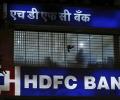
HDFC Bank's latest shareholding data showed that the room for foreign investment has fallen just 5 basis points short of the threshold set by Morgan Stanley Capital International (MSCI) to fully include the stock in its indices. Currently, the index provider has applied an adjustment factor of 0.5 since the foreign room is less than 25 per cent. Removal of the adjustment factor will result in inflows of a massive $4.8 billion (Rs 40,000 crore) into HDFC Bank, according to Brian Freitas, a New Zealand-based analyst with Periscope Analytics.

Top government officials in New Delhi have started discussions with stakeholders ranging from shipping and container companies to export promotion councils to understand the impact of the Iran-Israel tensions and plan ahead. Inter-ministerial talks are also being lined up amid the crisis situation in West Asia, sources confirmed. While the crude flows are not directly under any threat, elevated oil prices remain a concern, according to officials.
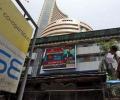
Shares of Avenue Supermarts (DMart) have rallied 15 per cent in the past month, even as the benchmark National Stock Exchange Nifty has remained flat. The stock has garnered favourable commentary from both fundamental and technical analysts after three years of poor performance. "DMart has reached its first 52-week high since October 2021, taking off from solid base formations.

...to fund the revenue gap. Of the gross market borrowing of Rs 14.13 trillion estimated for FY25, Rs 7.5 trillion, or 53 per cent, is planned to be borrowed in the first half.

Hong Kong has regained its spot as the world's fourth-largest market following a broad market rout in Indian equities. Currently, the Chinese territory's market capitalisation stands at $4.9 trillion versus India's $4.75 trillion, according to data compiled by Bloomberg. In January, the domestic equity markets' market capitalisation had surpassed that of Hong Kong following a spectacular rally in the small- and midcap stocks.

The finance ministry expects a broad-based moderation in inflationary pressures on the back of an anticipated reduction in food prices as a result of the uptick in summer sowing. The retail inflation rate remained stubbornly clung to the 5 per cent mark in seven of the past eight months. "Core inflation is trending downwards, indicating a broad-based moderation in price pressures... Driven by strong domestic growth and benign global commodity prices, core inflation is declining continuously.

Thrust on infrastructure and capital expenditure is expected to continue in the Union Budget for FY25.

'While Indian markets are indeed not inexpensive, the valuations of largecap stocks are still a considerable distance from being overstretched.'

'The committee has been constituted. Different government departments and FSDC members are part of it.'

Jefferies has identified 11 stocks set to benefit from long-term macro trends like capital expenditures, government manufacturing initiatives, and financialisation.

It's not only the Indian markets that command a valuation premium over their global peers; shares of subsidiaries of India-listed multinational companies (MNCs) also trade at rich valuations compared to their parent companies. An analysis of 12-month forward price-to-earnings (P/E) and price-to-book (P/B) multiples of domestically listed MNCs shows that most quotes have a premium ranging from 2.1x to 6x that of their parent. Similarly, P/B, in most cases, is significantly higher in the domestic market.

In a relief to homebuyers, assets in a real estate project that have been handed over to the allottee would be kept out of the liquidation process of the company, the latest amendment to the rules by the Insolvency and Bankruptcy Board of India (IBBI) has said. The notification dated February 12 said: "For the purposes of clause (e) of sub-section (4) of section 36, wherever the corporate debtor has given possession to an allottee in a real estate project, such asset shall not form a part of the liquidation estate of the corporate debtor." Real estate experts call it a "pragmatic approach" by the regulator. "However, there are many cases where possession has not been given because the property is stuck in insolvency.

It is being suggested that apps, such as WhatsApp and Telegram, should share their APIs with each other to ensure there is interoperability, just as it exists across email services.
 © 2026 Rediff.com - Advertise with us - Disclaimer - Privacy Policy - Sitemap - Feedback - About us - Terms of use - Grievances